
Case Study: Schoolhouse Social
A social development provider had outgrown its operational systems. There was no formal structure connecting courses, groups, enrolments, or attendance to the reports being produced. I architected and built a desktop application that manages courses, groups, students, attendance, and weekly reports, constructing a formal domain model with proper data integrity underneath.
It saves them just under a day of total effort per week.
They've since hired staff and grown their program to support more families.
“This app is life changing”
—James, Director, Schoolhouse Social
Full Case Study
Context
Schoolhouse Social delivers structured, term-based social development programs for children. Therapists run weekly sessions in groups, track attendance and engagement, and produce individual progress reports for parents.
The business had outgrown its operational systems. There was no formal model connecting courses, terms, groups, enrolments, or student records, and no structure that could scale with the program as it grew. The administrative overhead had capped the program's capacity. They couldn't take on more students without more hours in the week.
Approach
The work focused on making the underlying model explicit and enforcing it in software.
The system was designed around a small set of principles:
Explicit business objects and relationships
Adherence to privacy and data protection requirements for children's personal information
Immutable historical records
Clear lifecycle states
Error prevention over error recovery
Data ownership and recoverability
The interface follows from these constraints rather than compensating for their absence.
These principles informed the design and development of a custom desktop application built to replace the manual workflow entirely.
“Scott transformed the way we deliver our core service.
We were overwhelmed by inefficiencies we didn’t know how to solve without compromising quality.
He dug deep to understand what mattered to us, mapped out a clear plan, and designed, architected, and delivered a bespoke software platform that now saves us many hours every week.
From strategic advice to detailed documentation, we felt completely supported throughout. We’ve reclaimed work-life balance, run smoothly, and are now ready for our next phase of growth.
Strongly recommend.”
Architecture
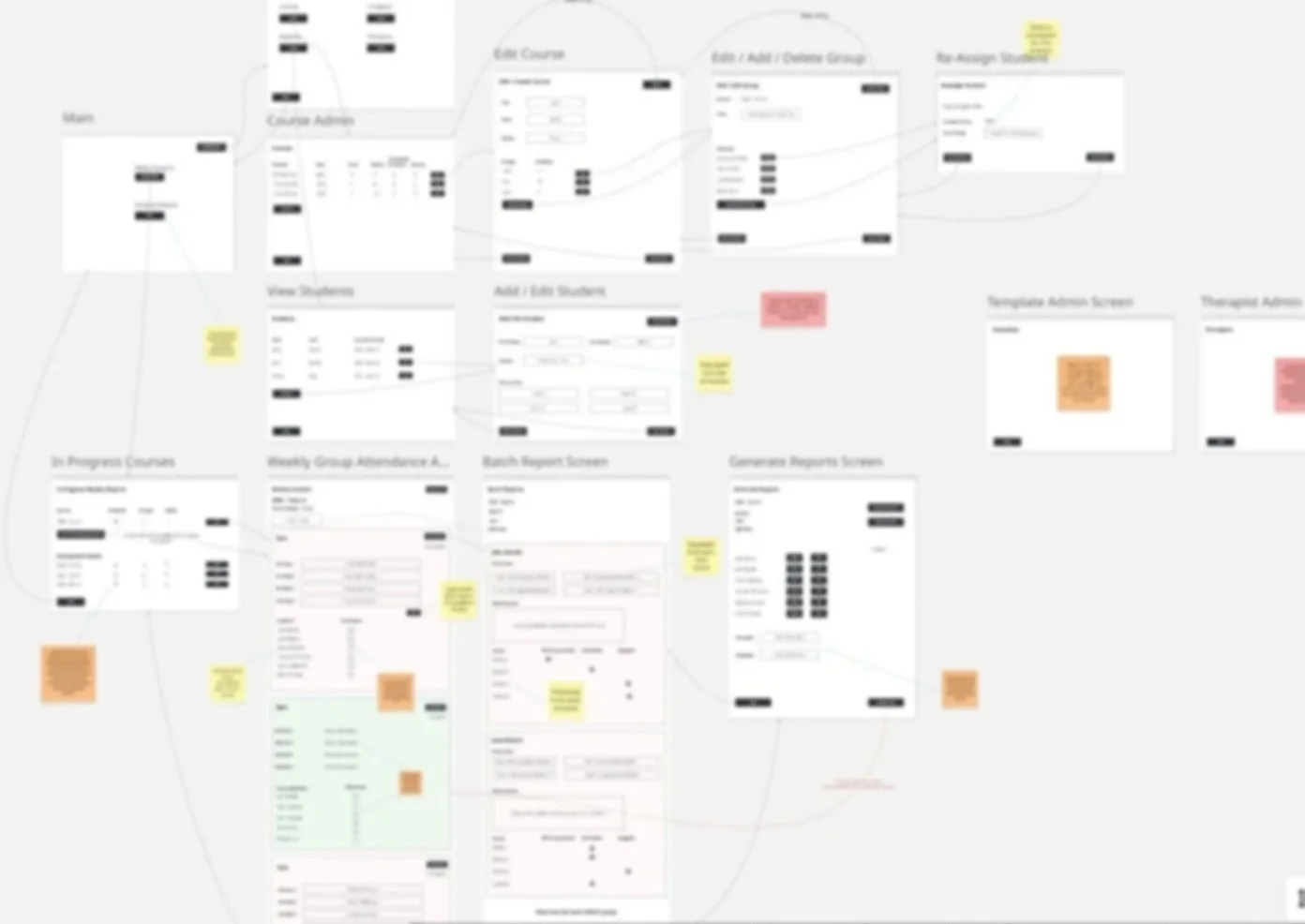
The application models the business as it actually operates: courses, terms, groups, students, enrolments, sessions, attendance, and reports, each with stable identifiers and explicit relationships.
Persisted records are wrapped in GUIDs and treated as immutable once finalised. Drafts can evolve; final artefacts cannot. Corrections produce new versions rather than rewriting history, ensuring reports sent to parents remain verifiable over time.
Reports move through explicit states (draft, finalised, archived) with constrained transitions. Exceptions such as late attendance corrections or off-cycle reports are handled without corrupting history or relying on manual reconciliation.
Transparent storage
All data is stored locally as structured, human-readable files that the business can protect using their existing data protection measures. There is no proprietary database and no external service dependency. The client owns their data in a literal sense: it remains usable and inspectable independently of the application. No lock-in. They can inspect or extend it themselves. All data is encrypted at rest.
Interaction and UX
The interface is designed to prevent errors rather than surface them after the fact.
There are no disruptive submit-and-fail workflows. Changes persist automatically on blur. Completeness is guided through subtle visual indicators rather than blocking validation. Users are never presented with a list of errors after the fact.
State is visible without being loud. The system makes it clear what needs attention, but never demands it prematurely.
Because the data model enforces correctness underneath, the interface can remain lightweight, responsive, and intuitive. Therapists move through sessions and reports without thinking about the tool.
Outcome
Administrative effort dropped by just under a day per week. More importantly, after being constrained by their administrative overheads, the practice was able to grow.
A few weeks after launch, James got in touch to say the app had been "life changing". They reclaimed their weekend.
Schoolhouse Social has since been able to meet demand that was previously beyond their capacity, expanding the program and hiring additional staff.
The domain model built underneath has also created value beyond the original brief, giving the business a future operational asset as they continue to scale.
Client: Schoolhouse Social
Scope: Problem and root cause analysis, business domain modelling, design and development of a custom desktop business application
Outcome: ~1 day/week admin reduction; enabled growth